"I explain the same thing three times and no one gets it."
"I lost the thread of that meeting from the start."
"I know what I want to say but it doesn't come out right."
— If any of these sound like you, it's not a matter of ability...
It's a matter of channel.
There's a reason certain ways of learning, communicating, and deciding come more naturally to you than others. It's called your dominant channel.
In 5 minutes, you can identify yours.
In NLP, the VAK model identifies three primary representational systems — Visual, Auditory, and Kinesthetic — through which every person processes their experience of reality. These aren't personality types or fixed labels. They're the entry point your mind uses first to connect with information, people, and decisions.
I've spent over 15 years working with executives and leaders across Bolivia and Latin America.
What comes up most often isn't a lack of intelligence or effort. It's friction between a person's channel and the channel of their environment: meetings that don't land, feedback that doesn't sink in, decisions that never quite close.
This test isn't here to put you in a box. It gives you a concrete map of how you process experience — so you can learn, communicate, and decide with more clarity.
Take the Test Now →When someone says "I don't understand anything in this meeting" or "explain it to me another way," they're not being difficult. They're processing from a different channel. The VAK model — developed within the framework of Neuro-Linguistic Programming — describes how each person connects with reality first: through images, words, or sensations.
Knowing your channel answers questions that used to have no answer: why do certain conversations exhaust you even when the topic interests you? Why do you click effortlessly with some people and always feel friction with others? Why do some decisions close easily while others just keep spinning?
The answer often lies in the compatibility — or incompatibility — between your channel and the channel of your environment or the person you're talking to. The VAK test shows you in 5 minutes.
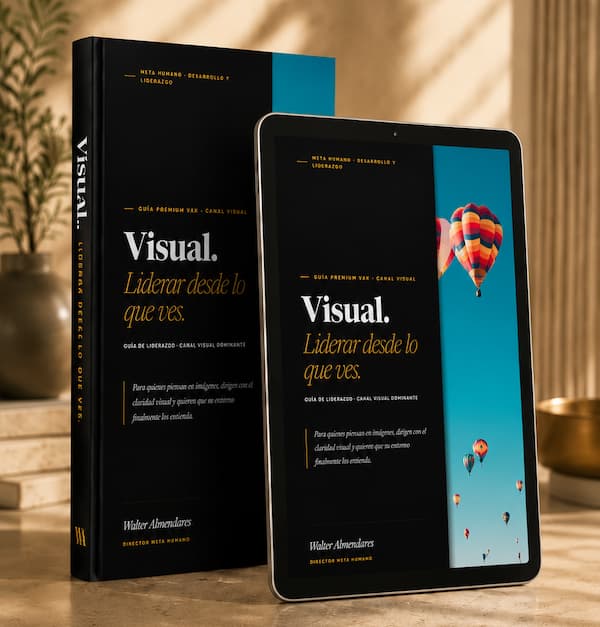
Processes through images and big-picture views. Needs to see the full map before committing. Gets frustrated when everything is verbal and nothing is written down. Greatest strength: anticipates scenarios others don't see. Greatest risk: waiting for so much clarity that action gets postponed.
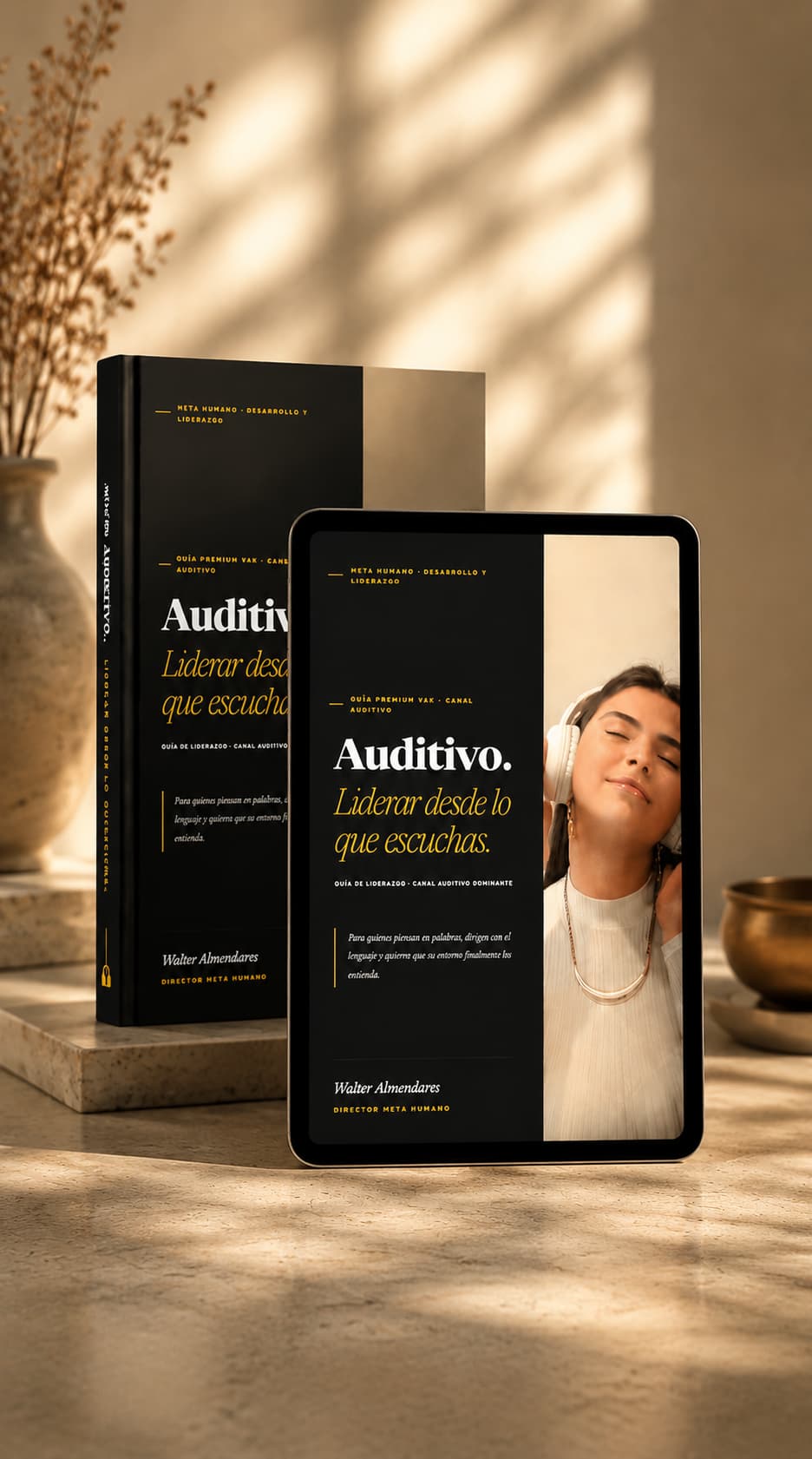
Processes through words and coherence. Needs something to sound right before trusting it. Picks up on nuances, tones, and inconsistencies others miss. Greatest strength: verbal precision and deep listening. Greatest risk: the internal dialogue that never stops.
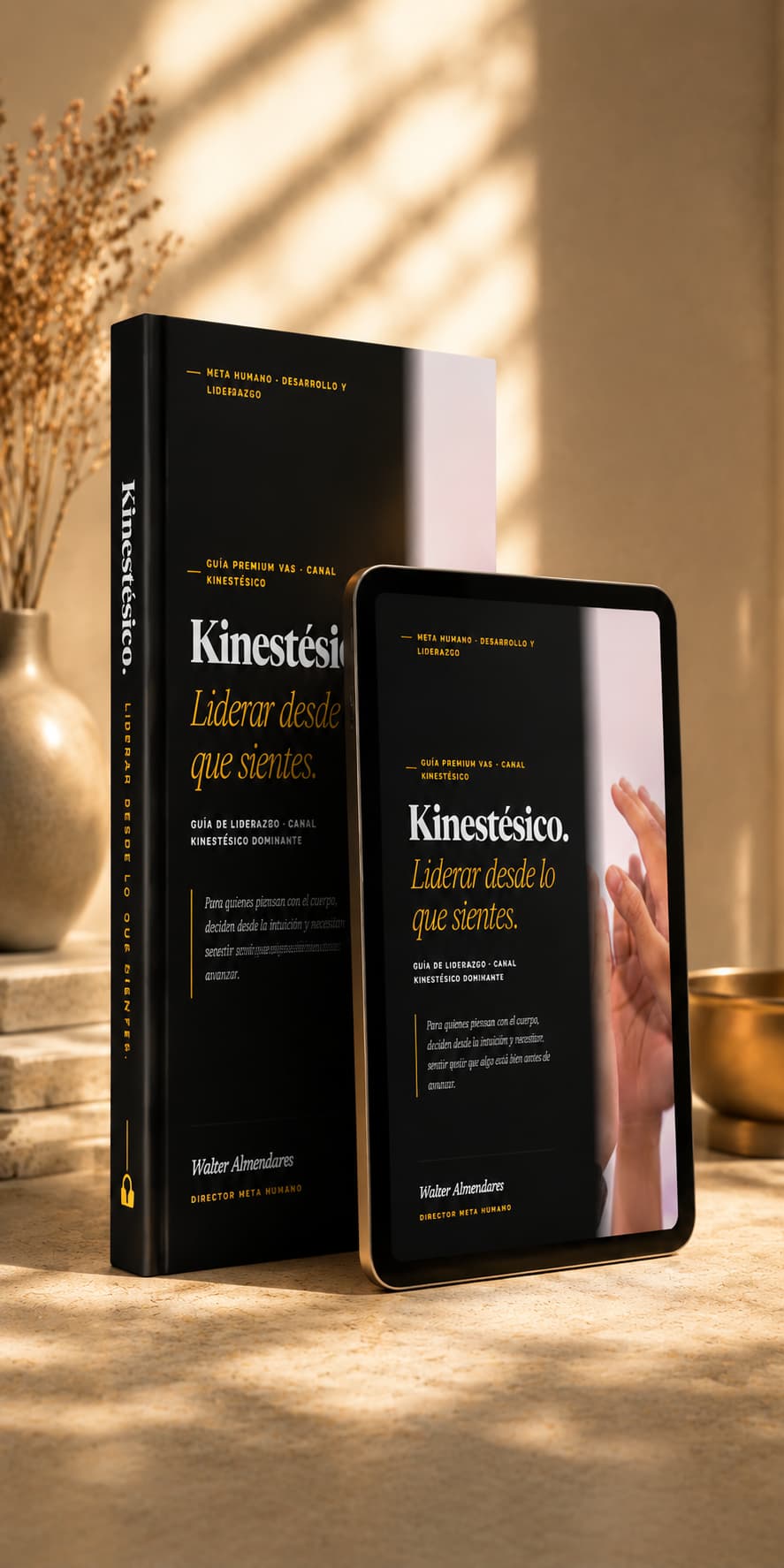
Processes through experience and sensation. Needs to feel that something is aligned before moving. Learns better by doing than by accumulating theory. Greatest strength: presence and reading the room. Greatest risk: postponing decisions while waiting for a signal that doesn't always arrive.
This free 36-question VAK test — based on the representational systems model from Neuro-Linguistic Programming — gives you your complete profile in under 5 minutes. Not as a label, but as a working map for communicating with less friction, learning more efficiently, and leading with greater executive clarity.
Walter Almendares — Director of Meta Humano · Executive Coach · Master's in Gestalt Psychotherapy
First Bolivian certified as Fellow Member Trainer by IANLP · Switzerland ↗
There's a certain kind of person who tries again and again — with discipline, with effort — and feels like something never quite clicks. It's not a lack of willpower. It's that no one ever explained how they process reality.
In 5 minutes you'll know if that's you.
Answer with your first instinct. There are no right answers — only your own.
Enter your name and email to see your dominant channel.
The VAK model comes from Neuro-Linguistic Programming (Bandler and Grinder, 1975) and has been widely used in coaching, training, and leadership. It is not a clinical psychometric test — it's a practical self-knowledge tool. Its value lies in the map it offers, not in a definitive label.
Yes. Most people have a primary channel and a secondary one. The test shows the full distribution across all three channels. A balanced result between two channels is completely valid and common.
Especially to adults. Perception channels solidify with experience. This test is designed for professionals and leaders who want to understand how they process information and communicate in high-demand contexts.
Your dominant channel informs how you present ideas, give feedback, and lead teams. A Visual leader communicates better with diagrams and big-picture views. An Auditory leader needs precise conversations. A Kinesthetic leader persuades through direct experience. Knowing this reduces friction in meetings, negotiations, and change processes.